

[ad_1]
Winter has arrived, bringing cooler mornings and evenings that make hot water feel even more essential than usual. As temperatures drop, the demand for reliable heating increases across every household. This is often the time people start reviewing their water heating systems, considering upgrades, or debating the merits of different types of geysers. The instant geyser and the storage geyser are the two most common choices, and both have clear strengths that appeal to different needs.

Although both appliances provide hot water, they do it in very distinct ways. Instant geysers focus on rapid heating through a compact, tankless system. Storage geysers work with a larger tank that heats and holds water for consistent use. Once this basic difference is understood, the comparison becomes much easier to explore. The aim is not to pick the most modern device or the one with the biggest tank, but to understand how each behaves in real living conditions, especially during winter when dependable hot water becomes a daily comfort.
Instant geysers: rapid heating and convenience for smaller needs
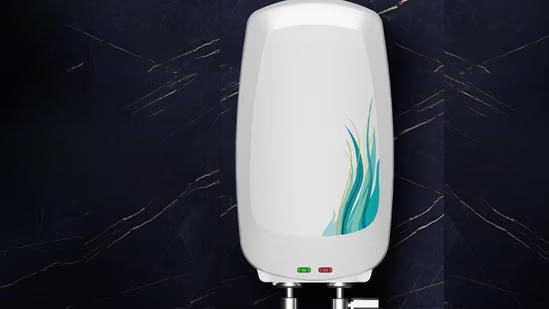
Instant geysers heat water directly as it flows through the unit. There is no waiting time for a tank to heat because the system begins working the moment you switch it on. This design offers a clear advantage on cold winter mornings when quick access to hot water feels particularly valuable. The compact size makes it easy to install in small bathrooms or kitchens where space is limited. Many homeowners appreciate that instant geysers do not occupy an entire wall and do not interfere with the room layout.
Another advantage is the lower energy consumption during use. An instant geyser heats water only when the tap is open, which reduces electricity usage over time. This can be reassuring during winter months when overall household energy consumption often increases due to heaters, longer showers and frequent use of kitchen appliances. The absence of a storage tank also means fewer chances of internal corrosion or long-term scaling.
Even with these advantages, instant geysers have practical limitations. The flow rate is usually lower than what a storage geyser can provide. If you expect strong hot water pressure for extended showers, an instant geyser may not always deliver the ideal experience, especially during peak winter when the inlet water is significantly colder. These systems are designed for quick bursts of hot water, not continuous supply. They perform best when used for short tasks, such as washing hands, cleaning utensils or filling a bucket.
Storage geysers: steady supply for longer and more comfortable usage
Storage geysers operate with a tank that heats and holds water until you need it. This creates a reserve that is extremely useful during winter, when longer and warmer showers feel necessary. Once heated, the geyser can supply hot water at a stronger and more stable flow. This makes it suitable for bathrooms that require extended usage or for larger households where several people bathe one after another.
The consistent flow is one of the strongest advantages of a storage geyser. Instead of depending on immediate heating, the system maintains a supply of hot water for as long as the tank capacity allows. This reliability is particularly important during winter, when inlet water is much colder and instant heating systems require more energy to reach the same temperature. Storage geysers handle colder conditions better because they heat a full tank and maintain its temperature.
However, storage geysers also come with their own limitations. They require time to heat the water in the tank, which means you need to wait before bathing if the hot water has already been used. The tank consumes more wall space and is heavier, which may be difficult in compact bathrooms. Since the system stores water, it may also experience scaling or mineral buildup over time, which increases maintenance needs.
Energy consumption is another factor to consider. Storage geysers consume more electricity because they heat and maintain the water temperature in the tank. During winter, this can become noticeable, especially when the unit needs to reheat frequently due to colder inlet water.
Instant geyser or storage geyser: understanding what fits best during winter
Now that winter has set in, the need for dependable hot water becomes central to daily comfort. Instant geysers offer speed, convenience and lower energy consumption for short tasks. They are ideal for kitchens, guest bathrooms or homes with modest hot water needs. The rapid heating is very appealing when you only need a few litres at a time.
Storage geysers, in comparison, support long and comfortable showers, steady water flow and multiple users in a row. Their ability to deliver a consistent and stronger stream of hot water makes them a preferred choice in winter. Larger families often find this option more practical because it aligns better with their daily routines.
Similar articles for you:
Price drop on Havells water heaters: Grab geysers of all capacities at up to 60% off
Top 10L geysers that balance fast heating, safety, and smart design
- What is the main difference between an instant geyser and a storage geyser?
An instant geyser heats water instantly, while a storage geyser stores and heats a fixed amount of water.
- Which geyser is better for winters?
A storage geyser is better for winters because it provides a steady flow of hot water.
- Do instant geysers save more electricity?
They save electricity during short and quick usage because they heat water only when needed.
- Are storage geysers suitable for large families?
Yes, they are ideal for multiple users and longer bathing sessions.
- Does an instant geyser work for showers?
It works for short showers, but the flow may drop in very cold temperatures.
Disclaimer: At Hindustan Times, we help you stay up-to-date with the latest trends and products. Hindustan Times has an affiliate partnership, so we may get a part of the revenue when you make a purchase. We shall not be liable for any claim under applicable laws, including but not limited to the Consumer Protection Act, 2019, with respect to the products. The products listed in this article are in no particular order of priority.
[ad_2]
Source link