

[ad_1]
For Indian investors, the concern is sharper because most international exposure from the country is concentrated overwhelmingly in US equities, particularly Nasdaq-heavy funds. While exposure to the world’s largest economy remains important, the current environment suggests that investors need to think more broadly about global diversification, rather than anchoring portfolios to a single market and a single theme.
The rise of mega-caps
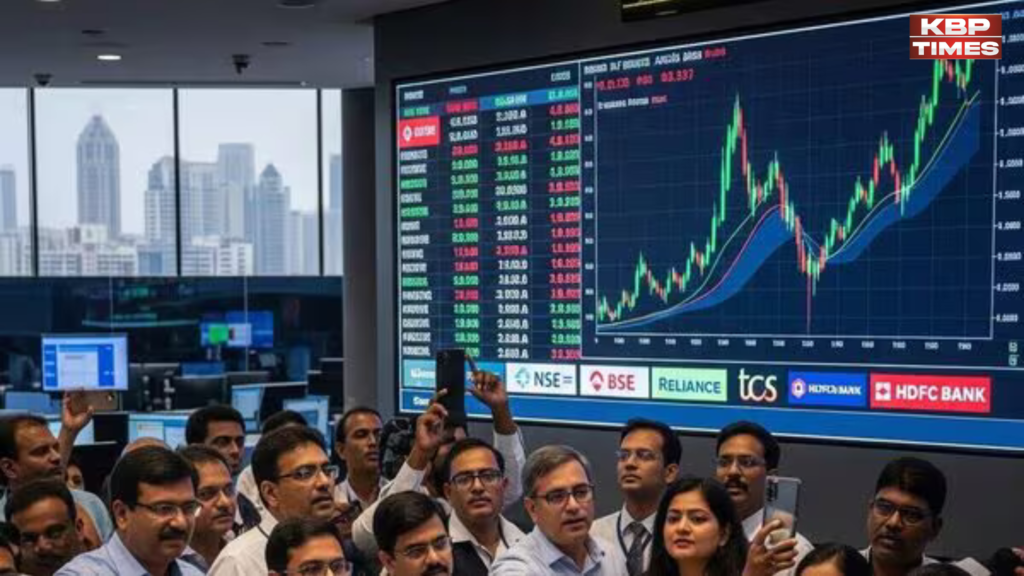
The US market rally has increasingly become a narrow one, powered by a small group of AI-linked mega-caps. While mega-caps are defined as the companies with over $200 billion market capitalization, 10 US stocks currently hold a market cap of over $1 trillion each. These include names like Nvidia Corp., Apple Inc., Alphabet Inc., Microsoft Corp., Meta Platforms Inc., etc.
Over the last three to four years, these companies have surged on the back of aggressive spending on data centres, chips, and computing infrastructure. The scale of this concentration is unprecedented. “AI-related firms have contributed almost 80% of US equity gains in 2025, with just the five biggest AI mega-caps making up around 30% of the S&P 500 and 20% of the MSCI World Index, the highest concentration in nearly 50 years,” said Ankur Punj, managing director and business head at wealth management platform Equirus Wealth.
The US technology sector now accounts for around 35% of total US market capitalization, and the 10 largest US companies comprise more than 20% of global equity value. Such dominance is extraordinary by historical standards and raises the risk that returns are being driven by an increasingly narrow part of the market.
Punj added that the S&P 500 is currently trading around 23x forward earnings, placing it in one of the most stretched valuation phases relative to other global markets since the dot-com boom. AI-related capital expenditure is expected to touch $390 billion in 2025, heavily concentrated in a handful of companies and contributing to what Punj described as a “circular AI economy”.
Signs of a bubble
Yet, according to most analysts and reports, despite these stretched valuations and the lopsided market structure, the US tech sector is not in an outright bubble, at least not in the classic sense.
Some segments of the US market are indeed expensive relative to their own history, pointed out Raunak Onkar, head of research and fund manager at PPFAS Mutual Fund. “Some businesses have seen a sharp rise in valuations simply because their short-term numbers have surged with AI demand, but not all of these companies have cash flows strong enough to justify those valuations.”
But he added that it would be inaccurate to call the entire US tech landscape a bubble, because certain companies continue to generate strong cash flows that fund their growth.
A recent Deutsche Bank report makes the same point: The rise in AI-driven valuations has been accompanied by real earnings growth and robust profitability, unlike earlier bubbles that were fuelled by unproven business models and unrealistic assumptions.
Dangerous dependence
Onkar cautioned that chasing fads simply because stock prices are rising is not advisable. And for Indian investors, the implications of the US rally are different from those for American investors. Both Punj and Onkar emphasized that the real problem for Indian investors is not exposure to the US per se, but excessive dependence on a single geography and theme. A narrow market rally, stretched valuations, and currency movements create asymmetrical risks.
Punj pointed out that Indian investors face a double-layered risk during a US correction. “A US pullback driven by an AI correction could see stocks fall. If stocks fall, capital may move out of the US, causing the dollar to weaken against the rupee, hitting Indian investors both ways.”
Onkar added that international investing should follow a diversified approach rather than revolve around the US alone. For most Indian investors building global exposure, the weakness lies in the absence of meaningful allocation to the rest of the world.
Beyond the US
The US comprises half of the global market capitalization. Therefore, any diversified global portfolio, noted Onkar of PPFAS Mutual Fund, cannot and should not exclude the US entirely. “If one has to build global exposure, investors will need to accept US markets as being part of that diversified portfolio. Also, looking at it purely from a US and non-US perspective might disadvantage investors as they won’t be able to participate in sectors that are leading with growth,” he explained. Many innovative companies across sectors are listed in the US but earn cash flows from across the world.
Nevertheless, valuation opportunities outside the US look more balanced. Punj highlighted Europe and Japan as attractive regions. Europe offers broad-based exposure through cyclical sectors, industrials, and stable dividend-paying companies that have significantly lagged US valuations.
Japan, despite its strong run, continues to benefit from corporate governance reforms, improving shareholder returns, and valuations that remain appealing in many long-neglected sectors. Overcoming the fears of technical recession until a few months ago, meaning two consecutive quarters of shrinking GDP, Japan’s equity market remains anchored by sustained reform momentum.
Recent reports from JP Morgan and Goldman Sachs indicate that Japanese equities are undergoing a structural re-rating, driven by rising dividends, record buybacks, and stronger board independence, marking a significant departure from decades of economic stagnation.
Among emerging markets, Brazil appears particularly compelling. Punj noted that Brazil trades at low-teen price-to-earnings multiples while benefiting from commodity demand, structural reforms, and higher foreign participation.
Taiwan and Korea also offer exposure to the global semiconductor supply chain, but remain more volatile and sensitive to US tech sentiment. Punj suggests that Indian investors diversify across developed markets like Europe and Japan, with modest exposure to emerging markets. “Retail investors should restrict international allocation to 20% of the overall portfolio, and as far as allocation outside the US is concerned, currently should focus on Europe/Japan, 80%, and some allocation to emerging markets like Brazil, 20%,” he said.
Diversification through mutual funds
Interestingly, mutual fund data suggests that Indian investors have already started rebalancing to other geographies. Several international funds outside the US have seen significant AUM growth. The Invesco India-Invesco Global Equity Income Fund of Fund grew from ₹25 crore in December 2024 to ₹170 crore in October 2025, a jump of 580%. The Axis Greater China Equity FoF saw its AUM rise 488% to ₹1,501 crore over the same period. These trends show growing willingness among investors to explore opportunities beyond US-centric products.
Onkar stressed that even outside the US, there are pockets of expensive and reasonably priced businesses. “Valuation opportunities exist everywhere, even in markets that appear overvalued in aggregates,” he said. So, instead of betting on single countries, he recommended multi-geography ETFs, which offer instant diversification without requiring investors to track individual stock stories across continents.
Saurabh Mittal, CFA and founding director at wealth manager Circle Wealth Advisors, said most client portfolios maintain 10% to 15% international exposure. But after the sharp US rally in recent months, the weight of US funds has naturally risen. “What we are doing is just rebalancing those allocations and bringing them back to desired levels,” he explained.
Money is also being shifted from US-specific funds to broader global indices like the MSCI World Index. “But even in the MSCI World Index, US stocks are approximately 75%. So you are not immune to what happens in the US,” he said. The MSCI World Index captures large- and mid-cap representation across 23 Developed Markets (DM) countries.
Mutual funds or ETFs?
Most experts believe India-domiciled international mutual funds and exchange-traded funds (ETFs) remain the cleanest and relatively safer way for Indian investors to build global exposure. Punj highlighted their advantages: better risk control, simpler taxation, transparent structure, and none of the complexities involved in owning stocks directly abroad.
Onkar added that stock-picking in international markets requires deep research and monitoring, which remains difficult for most retail investors.
Both Punj and Onkar emphasized the importance of a staggered approach to investments, as predicting corrections or bubbles is impossible. A long-term horizon and systematic investing, he said, is the most reliable path.
While that may be true given that domestic domiciled ETFs are trading at a premium, now may not be the time to invest through them.
Rushabh Desai, founder of mutual fund distributor Rupee With Rushabh Investment Services, said valuations in US equity markets, especially tech, have become expensive, and due to Securities and Exchange Board of India’s restrictions on overseas mutual fund inflows, many ETFs are trading at unusually high premiums.
In his view, domestic markets currently offer better risk-adjusted opportunities. “This is the right time to focus on home rather than abroad as the returns in the Indian equity markets have been subdued and with reasonable valuations in many pockets,” he added.
Investing via mutual funds, either through active or index funds, said Desai, is always better from a risk, return and liquidity point of view for retail investors. But if you are looking to invest abroad, you could consider outbound retail funds and ETFs that apps like Vested Finance and IndMoney have begun to offer.
Experts also warned that chasing US tech after a huge AI-driven surge can backfire; FOMO buying and panic exits destroy wealth. As Onkar noted, investing isn’t thrill-seeking but goal-driven. With the US so dominant and capable of making global markets “catch a cold” when it sneezes, a broader, more balanced global diversification via the mutual fund route, where experts invest your money after deep research, remains the safer long-term path.
[ad_2]
Source link